The 18 Steps (Shibati): Where Old Chongqing Still Breathes
When 18 Stone Steps Decide the Fate of a Neighborhood
The most magical place in Chongqing isn't the light rail passing through a building, nor the street exit on the 11th floor.
It's that this city always manages to hide a living piece of urban history in its most unassuming corners.
Like The 18 Steps.
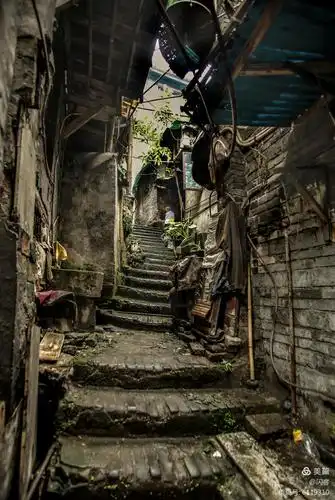
The name sounds like a math problem: eighteen stone steps. But its story begins with a well from the Ming Dynasty.
Legend has it that in the Ming Dynasty, there was a sweet-water well here. Its clear, refreshing water was a lifeline for the surrounding residents. From the well to the nearest residential area was exactly eighteen stone steps—no more, no less.
Thus, the name "The 18 Steps" was born.
But behind the number lies a stark reality: these eighteen steps divided two Chongqings.
The Upper City was for officials, merchants, and the respectable. The Lower City was for dockworkers, laborers, and common folk. The 18 Steps were the critical passage connecting these two worlds.
Every morning, porters would climb these eighteen steps, carrying aquatic products from the Jialing River and goods from the mountain city up to the Upper City. Sweat dripped onto the bluestone slabs, and over centuries, the steps were worn smooth as mirrors.
From "Urban Scar" to National Intangible Cultural Heritage: A 320 Million Yuan Restoration Surgery
If you visited The 18 Steps around 2010, you'd have seen a different sight.
Dilapidated wooden houses. Exposed electrical wires like spiderwebs. Long queues for public toilets. Local media bluntly called it an "urban scar."

But beneath the scar lay the city's most authentic, everyday fabric.
In 2017, a restoration project costing 320 million yuan (approx. $45 million) began. This wasn't a demolition and rebuild, but a delicate "urban surgical procedure."
The designers faced a core contradiction: how to preserve the soul of old Chongqing while meeting the functional needs of modern tourism?
The answer lay in three words: Restore the Old as Old.
But how "old"? The team made a bold decision—to preserve 70% of the original structures. The smoke-stained wooden beams, the stone slabs hollowed by footsteps, the old slogans on the walls—all were kept.
The most challenging was a three-story stilted house. Its foundation was severely tilted, walls cracked. Standard practice would be to demolish it. Instead, the team brought in heritage experts, used traditional mortise and tenon techniques to reinforce it, and preserved it.
Today, it stands as a "living specimen" of The 18 Steps, where visitors can touch the real marks of time.
In 2021, Shibati was designated a "National Intangible Cultural Heritage Tourism District." The journey from a slum to national recognition was more than just eighteen steps.
It was four hundred years.
How a Movie Changed the Fate of a Street
In 2016, Zhang Yibai's film "I Belonged to You" was shot here.
In the movie, Deng Chao's character, DJ Chen Mo, broadcasts from a radio station on The 18 Steps. The camera pans across the bluestone paths, old tea houses, and clotheslines.
After the film's release, tourist numbers to The 18 Steps surged by 300%.
But local feelings were mixed.
"We used to complain it was shabby; now we complain it's noisy," said a shop owner who had lived there for forty years.
Tourism brought business opportunities, but also commercialization anxiety. Starbucks moved in. Queues formed outside trendy bubble tea shops. Some worried: would The 18 Steps become the next Ciqikou—bustling, but soul-less?
The restoration team made a smart decision: limit the proportion of chain brands. Over 60% must remain local, long-standing shops.
So you can still find here:
- A noodle shop on the steps that's been open for 32 years, where the owner knows every regular's preference
- A third-generation rice pudding stall that starts grinding rice at 4 a.m.
- An old craftsman who has been repairing wicker chairs for half a century
The movie brought the crowds, but what keeps them is the life that wasn't washed away by the tide of popularity.
The Bluestone Path: Every Step Treads on Memory
Walking through The 18 Steps, don't just look at the shops.
Look down at the stones.
Every slab has a story.
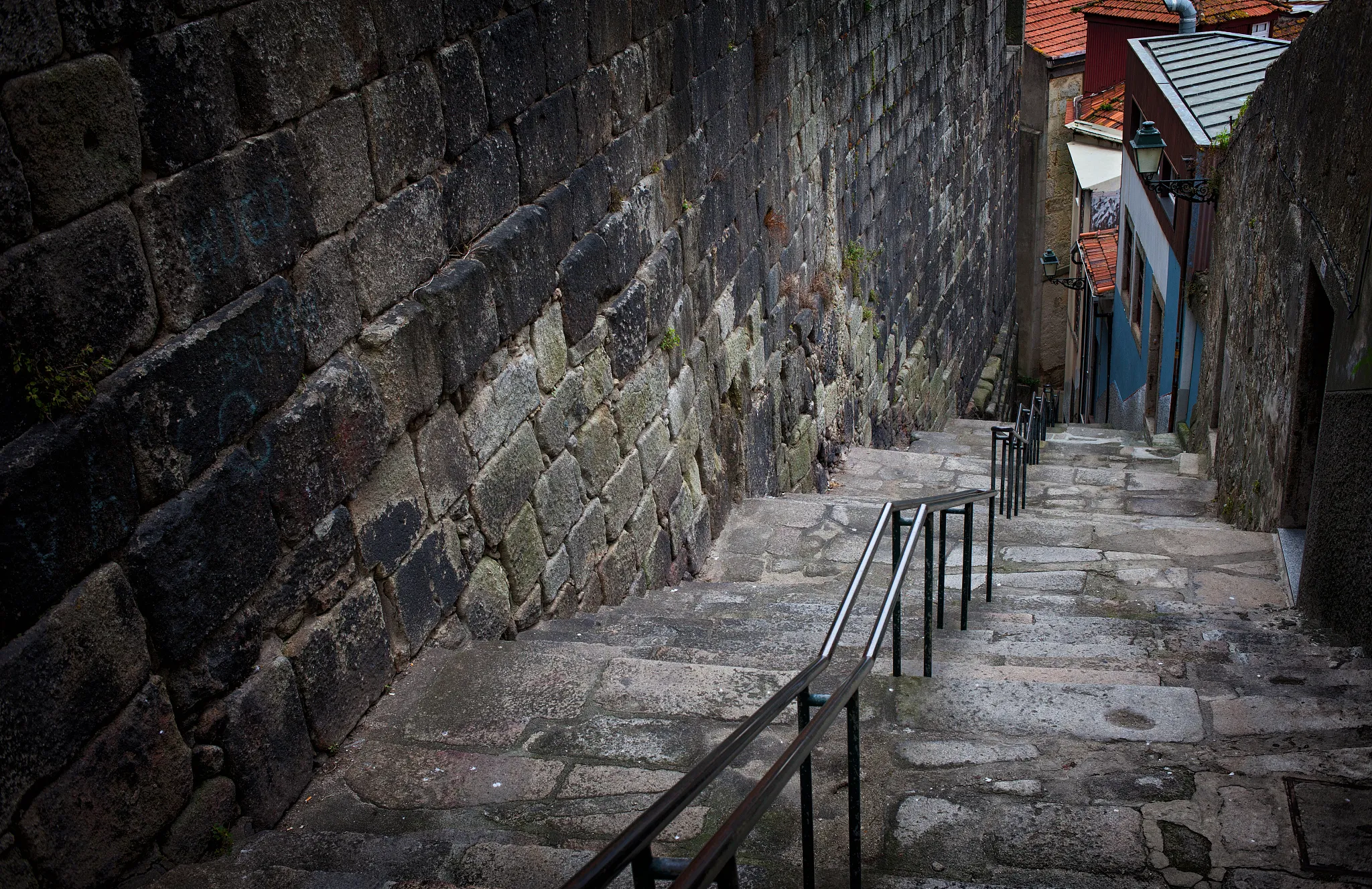
The smoothest "groove" in the middle is a collective creation of centuries of porters' steps. Carrying hundreds of kilos of goods, day after day, they carved "tracks" into the stone.
The slab at the corner with a chip? Old residents will tell you: during the Great Bombing of 1941, a bomb fell nearby, and a piece of shrapnel struck it. The chip was left unrepaired as a memorial.
The most remarkable sight is on rainy days.
Rainwater flows down the steps, forming tiny "streams" in the hollows worn by footsteps. Old Chongqingers say this is The 18 Steps "breathing"—the rain is its pulse, the stones its skin.
A few must-see spots:
- The "Movie Wall" Corner: The filming location from "I Belonged to You," now covered in movie stills and fan messages. Look closely, and you'll see remnants of 1960s slogans at the base of the wall.
- The Second Floor of an Old Tea House: Order a cup of tuocha tea and sit on a creaky bamboo chair. Outside the window are layers of tiled rooftops—time has slowed here by half a century.
- The Clothesline Alleyway: Afternoon sunlight filters through drying bed sheets, creating a natural corridor of light and shadow. It's Chongqing's most everyday form of "installation art."
A Minimalist Guide to Authentic Snacks
When eating at The 18 Steps, remember one principle: The less conspicuous, the more authentic.
- Step-Side Noodles: The shop at the turn of the stone steps, only open for breakfast and lunch. The owner has been perfecting his spice blend for thirty years, with distinct layers of numbing heat and chili.
- Old-Style Rice Pudding: Opens at 4 a.m., with rice freshly ground. Topped with crispy fried dough strips (sanzi), peanuts, and scallions—it's the "gentle violence" of a Chongqing breakfast.
- Mountain City Glutinous Rice Balls: The skin is so thin it's translucent, with a flowing black sesame filling. A bowl after eating spicy food is an "emergency rescue" for your palate.
- Alleyway Hotpot: Avoid the big restaurants facing the main street. Head deeper in. The nine-grid hotpot under a residential building—its beef tallow aroma can waft down three streets.
What The 18 Steps Teaches Us
The most precious thing about Chongqing isn't the meticulously packaged "attractions."
It's the courage of places like The 18 Steps—to dare to keep its scars, to dare to let the old and new coexist.
Here, legends of a Ming Dynasty well and the aroma of Starbucks coffee can share the same space. Wartime bomb marks on bluestone can share a frame with Instagram photos. Old tea house tuocha and young people's selfie sticks can share the same sunlight.
The 18 Steps wasn't "restored" into a museum.
It chose to keep breathing—carrying four hundred years of memory, along with today's vibrant, everyday life.
These eighteen stone steps never just connected the Upper City and the Lower City.
They connect Chongqing's past and present, its scars and glory, its everyday grit and its poetry.
And all of this is still alive, in the breath of every single bluestone slab.
<!-- SEO Keywords: Shibati, The 18 Steps Chongqing, Chongqing old town, Chongqing history, Ming Dynasty well, I Belonged to You film location, Zhang Yibai, Deng Chao, Chongqing Upper City Lower City, Jialing River, Chongqing intangible cultural heritage, Chongqing restoration, Chongqing street food, Chongqing bluestone steps, Chongqing cultural heritage, Chongqing tourist attractions, Chongqing old street
SEO Description: Discover Shibati—Chongqing's 400-year-old "18 Steps" that connect the Upper and Lower City. From a Ming Dynasty well legend and a 320 million yuan restoration to its rebirth as a National Intangible Cultural Heritage site after the film I Belonged to You. Explore authentic step-side noodles, century-old tea houses, and bluestone pathways that still breathe old Chongqing. -->
No comments yet