Yangtze River Cableway - Crossing the Yangtze: A Sky Bus Through Chongqing's Heart
From Commuter Tool to Urban Icon
Imagine this: a morning in 1987.
Dockworkers in Chongqing cram into a metal box, paying 50 cents for a 4-minute 'flight' across the Yangtze River, from the north bank to the south. For them, it was just the way to work – no different from taking a crowded bus.
No one imagined that thirty years later, this same metal box would become Chongqing's "Sky Bus," with tourists queuing for two hours to experience that same 4-minute journey.
From a practical utility to a tourist attraction, the Yangtze River Cableway has undergone the most fantastical transformation in the history of China's urban transit.
Physics Class: Why Doesn't This Thing Fall?
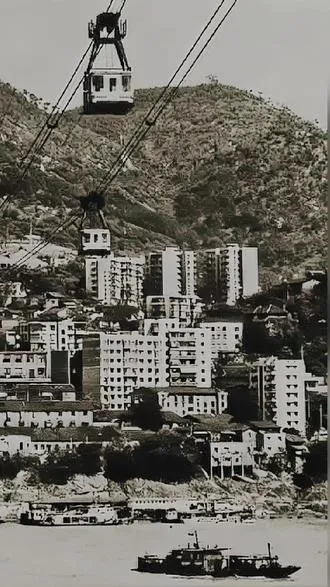
The principle is disappointingly simple: it's two steel cables.
One is the "carrying cable" – 52 mm in diameter, responsible for suspending the cabin. The other is the "hauling cable" – responsible for pulling the cabin along.
But the devil is in the details.
The Yangtze River Cableway was China's first self-designed and constructed cross-river passenger cableway. With a total length of 1,166 meters, a cabin capacity of 80 people, and an operating speed of 6 meters per second. The key number: a maximum incline of 45 degrees.
Why 45 degrees? To avoid buildings on both banks while ensuring a smooth ride.
The designer's solution: a 22-meter height difference between the towers on the two banks creates a natural slope. The cabin is suspended from the carrying cable via four sets of rollers, and the hauling cable is pulled by drive wheels at both ends – like a ski lift, just 100 times larger.
The most ingenious part is the safety system: four independent braking devices. Even during a power outage, the cabin can glide back to the station using gravity.
"It's safer than an elevator," says a veteran operator with 30 years on the job. "Over thirty years, zero accidents."
Ticket Survival Guide: How to Skip the 2-Hour Queueing Hell
This is the cableway's harshest reality: queue times in peak season equal watching a full movie.
But you can be the one who skips the line.
Core Strategy: Off-Peak Hours + Pre-Booking
- Timing: Weekday mornings 7:30-9:00 (commuter hours for locals), or afternoons 16:00-17:30 (before sunset). Avoid weekends and holidays – the peak of the queues.
- Tickets: Search for the WeChat Official Account "重庆索道公司" (Chongqing Cableway Company) and book one day in advance. Buying tickets on-site via QR code still involves queuing; online booking has a dedicated entry channel.
- Direction: Board at Xinhua Road Station (North Bank) → Shangxin Street Station (South Bank). 90% of tourists board from the north bank, so going the opposite direction cuts queue time by half.
- Ticket Type: One-way is 20 RMB, round-trip is 30 RMB. Opt for one-way – get off on the south bank and head directly to One Tree Hill on Nanshan for the night view.
- Secret Entrance: The "Union International Plaza" next to Xinhua Road Station has an observation deck. Buying an observation deck ticket (68 RMB) grants queue-free access to the cableway.
Pitfall Checklist:
- Scalper tickets are 50% more expensive and may be invalid
- Don't trust "express lane" unofficial guides
- Travel light – the cabin gets crowded
- Wear a hat; the cabin roof gets hot in summer
Day vs. Night: Two Completely Different Chongqings
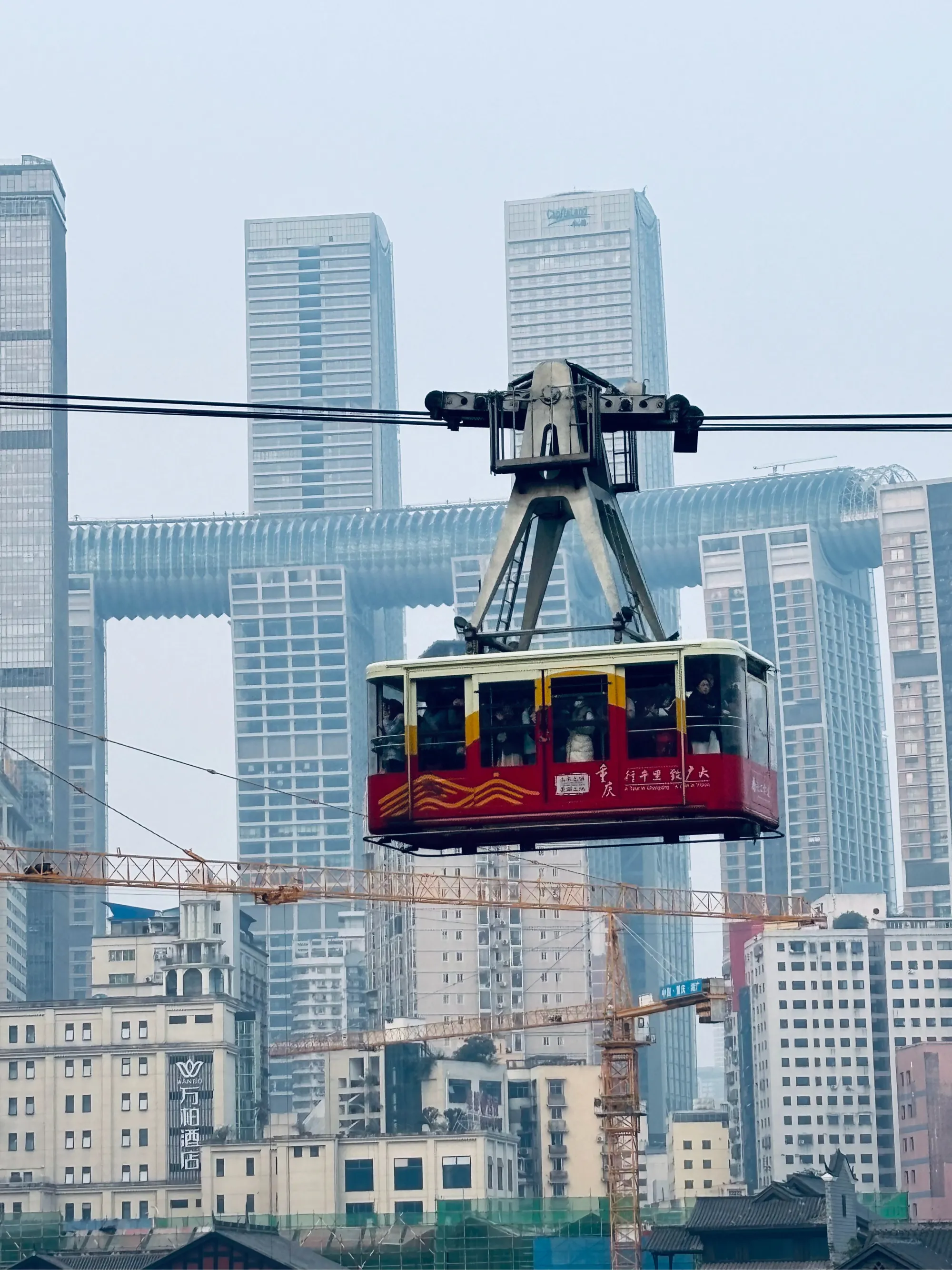
Daytime (7:30-18:00)
- View: See the clear distinction where the "yellow" Yangtze meets the "green" Jialing River at Chaotianmen. The layered buildings on both banks are distinct, with landmarks like Liberation Monument and Raffles City identifiable.
- Photography: Use a telephoto lens to capture details of buildings on the opposite bank. Best light is between 9-11 AM.
- Atmosphere: The cabin is mostly filled with local elderly and students. You can hear authentic Chongqing dialect and smell the breakfast they bring along.
- Experience Rating: 7/10 (Clear but somewhat ordinary)
Nighttime (19:00-22:30)
- View: The city transforms into a giant circuit board. The golden glow of Hongyadong, the silver-white strip of Nanbin Road, and the colorful LEDs of skyscrapers – Chongqing redraws its topography with light.
- Photography: Your phone is enough. Increase ISO, turn off the flash. The best shooting spots are the windows in the four corners of the cabin.
- Atmosphere: Exclamations from tourists, the click of camera shutters, whispers between couples. The cabin becomes a moving observation deck.
- Experience Rating: 9/10 (Magical but crowded)
Personal Suggestion: If you can only go once, choose evening. Board around 17:30 and experience the transition from day to night during the 4-minute ride – that's Chongqing's most moving four minutes.
Aerial History Lesson: Viewing the Riverbanks' Evolution from the Cableway
The Yangtze River Cableway is Chongqing's best observation deck because it offers the only continuous, four-minute aerial perspective.
1987 Perspective:
North Bank: Low tile-roofed houses, dock cranes, chimneys.
South Bank: Farmland, scattered factories, dirt roads.
2000 Perspective:
North Bank: The Liberation Monument commercial district rises, but buildings are mostly under 20 stories.
South Bank: Residential complexes begin to appear.
2026 Perspective:
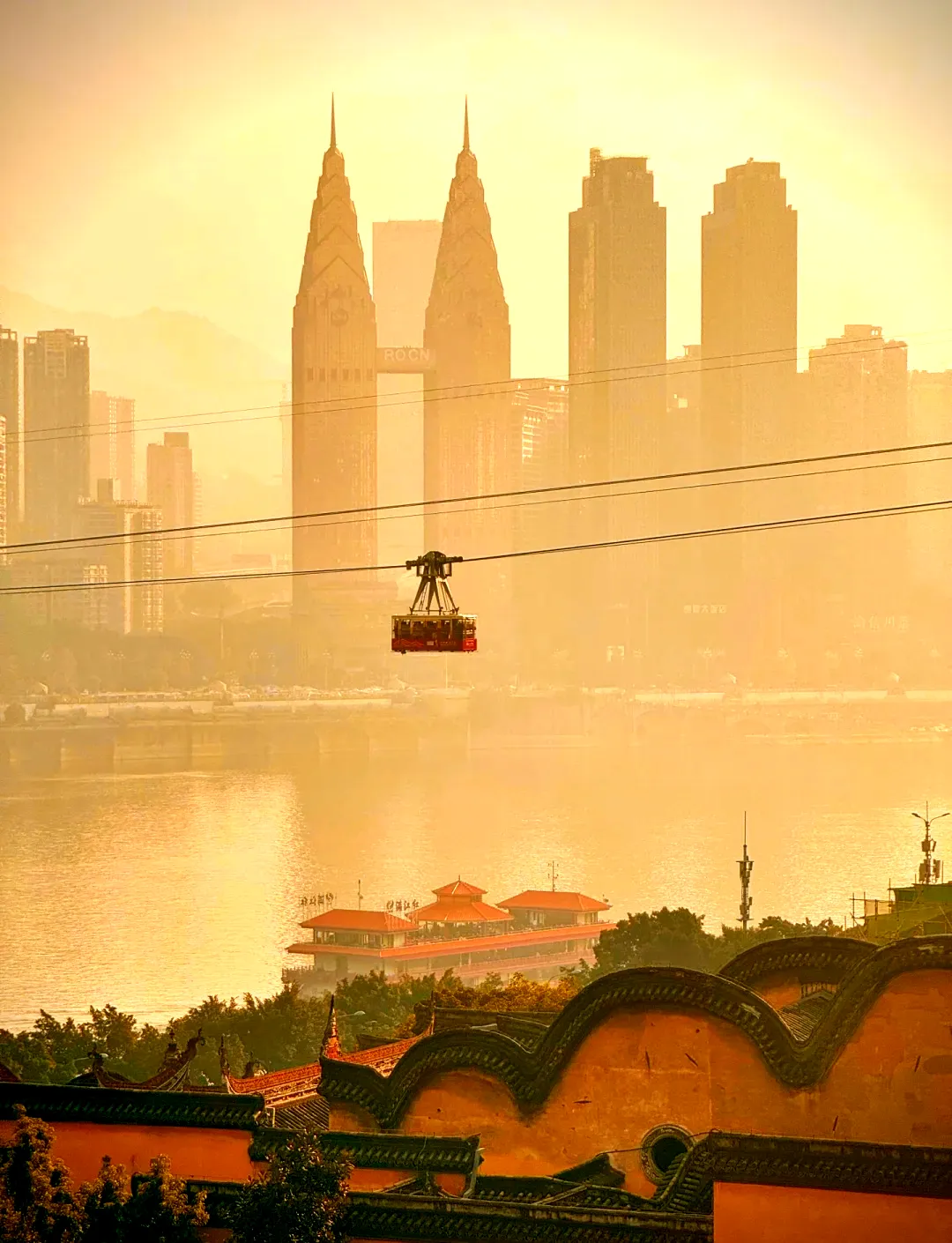
- North Bank (Yuzhong Peninsula):
- Left: The golden cascade of lights from Hongyadong
- Center: The "Sails" silhouette of Raffles City
- Right: The forest of skyscrapers around Liberation Monument
- Below: The ribbon of car lights along the riverside road
- South Bank:
- The terraced lights of Danzishi Old Street
- The neon signs of the floating restaurants along Nanbin Road
- The pinpricks of light from the Nanshan hilltop observation deck
The most striking aspect is the height contrast: the cableway itself is at 280 meters above sea level, while the Yangtze River beneath it is at 160 meters. Within this 120-meter vertical difference lies 80 years of Chongqing's urban development.
You can see the trajectory of urban expansion at a glance: from riverbank docks → mid-slope residences → hilltop commercial districts. Chongqing didn't "sprawl out," it "climbed the stairs."
The Golden Triangle: Cableway + Liberation Monument + Hongyadong Combo Guide
The Yangtze River Cableway shouldn't be an isolated attraction. It's the core piece of the puzzle.
Half-Day Efficient Route:
- 14:00 Start at Liberation Monument Pedestrian Street, explore Bayi Road Food Street
- 15:30 Walk 10 minutes to Hongyadong (enter from the 11th-floor entrance, exploring top-down)
- 17:00 Walk 15 minutes from Hongyadong to the cableway's Xinhua Road Station
- 17:30 Take the cableway to the south bank
- 18:00 Take a 10-minute taxi to One Tree Hill (Nanshan) observation deck
- 19:00 Enjoy the panoramic night view of Chongqing
Why This Itinerary Works:
- Perfect timing (avoids the peak crowds at each location)
- Reasonable walking distances (Liberation Monument → Hongyadong → Cableway are all within 1 km)
- Progressive scenery (urban streetscape → cliffside architecture → aerial view → panoramic overlook)
Money-Saving Tip: Purchase a "Chongqing Urban Tourism Card," which includes a one-way cableway ticket and discounts for multiple attractions.
Final Advice: Put Down Your Phone for 4 Minutes
I know you'll want to take photos.
But please, for at least one minute, look away from your screen, and just look out the window.
Feel the cabin's gentle sway. Listen to the hum of the steel cables. Watch the river flow 400 meters below. Those skyscrapers become small, while the Yangtze becomes immense.
For these four minutes, you are not a tourist, not a passerby.
You are a moving coordinate point within Chongqing's three-dimensional transportation network, traversing the city's space and time.
The Yangtze River Cableway's most precious gift isn't what it lets you see.
It's that it lets you understand this mountain city anew – from the perspective of a Chongqing local: suspended in the air, connecting both banks, always in motion.
It remains the "Sky Bus." Only now, its passengers have shifted from dockworkers to the eyes of the world.
And Chongqing remains a city that requires flight to truly comprehend.
<!-- SEO Keywords: Yangtze River Cableway, Chongqing cableway, Xinhua Road Station, Shangxin Street Station, Chongqing Sky Bus, Yangtze River crossing, Chaotianmen, Jialing River, Chongqing night view, Raffles City, Yuzhong Peninsula, Danzishi Old Street, Nanbin Road, Nanshan One Tree Hill, Liberation Monument combo, Hongyadong combo, Chongqing tourist attraction, Chongqing transport
SEO Description: Ride the Yangtze River Cableway—Chongqing's iconic 1,166-meter "Sky Bus" crossing the Yangtze. Comprehensive guide with skip-the-line ticket strategies, day vs. night experience comparison, the best Golden Triangle combo route (Cableway + Liberation Monument + Hongyadong), and 80 years of Chongqing's urban evolution viewed from 280 meters above the river. -->
No comments yet