Hongyadong - The Stilted City on the Cliff: Ancient Wisdom Meets Modern Design
When Architecture Learns to "Rock": The Seismic Secrets of Stilted Buildings
Standing by the Jialing River and looking up at Hongyadong, your first reaction might be: "How can this possibly not collapse?"
Thirteen-story pavilions stack vertically against the cliff, their shimmering lights resembling the bathhouse from Spirited Away. But this isn't magic; it's the architectural wisdom refined by the ancient Ba and Yu peoples over 2,300 years – the stilted building.
The core principle is simple: let the building "dance" rather than "resist head-on."
Imagine a rock musician on stage: knees slightly bent, body swaying naturally with the rhythm. When seismic waves strike, traditional masonry buildings are like stiff amateurs trying to resist with brute force, often resulting in structural damage. In contrast, stilted buildings are like seasoned musicians, absorbing impact energy through flexible deformation.
The secret lies in the "Chuandou-style wooden frame."
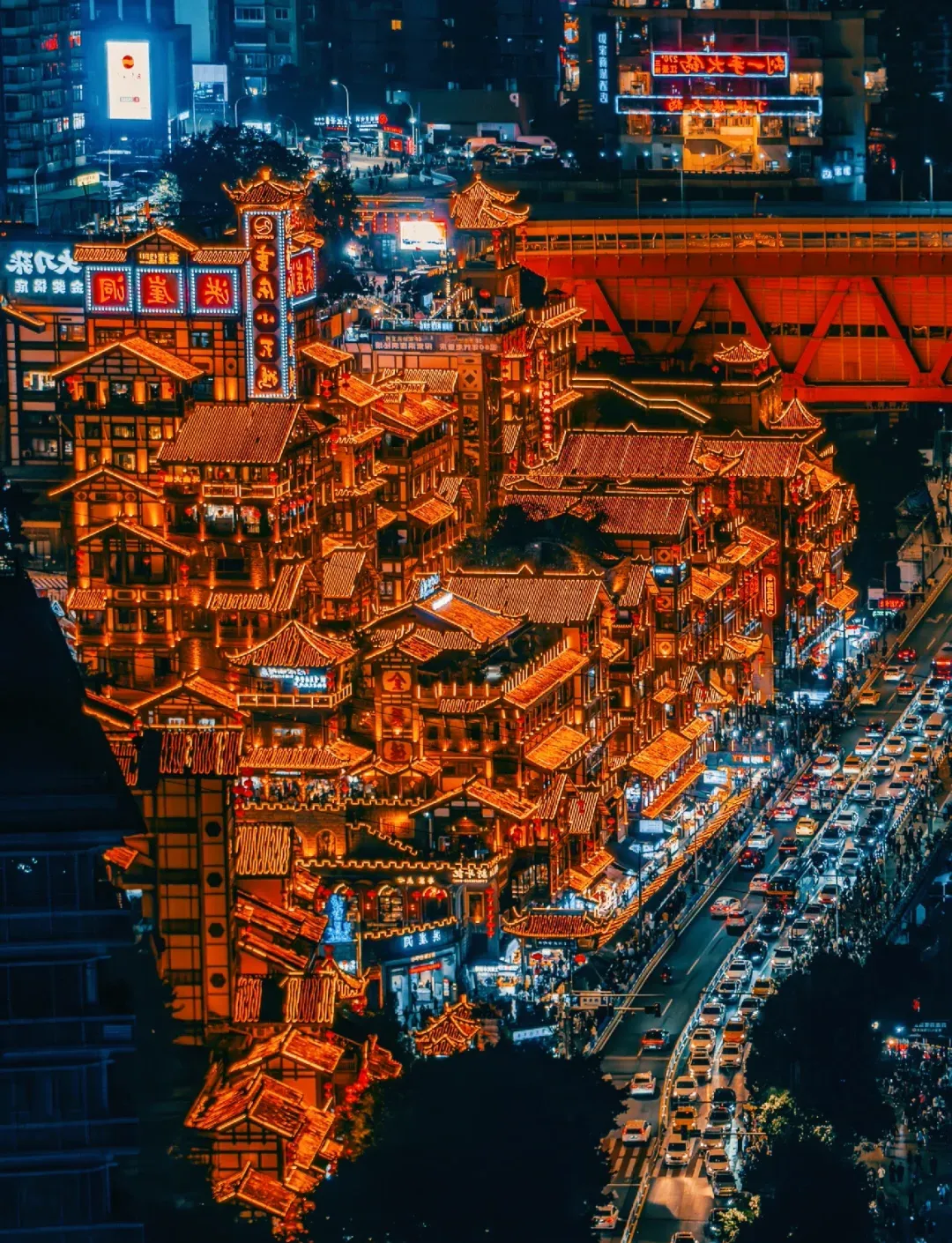
In this traditional technique, densely arranged wooden columns are not isolated. They are connected by horizontal "through-beams" (Chuanfang), forming individual bents of the roof frame. These bents are then linked longitudinally by additional through-beams, creating an integrated grid. Purlins (Lintiao) rest directly on the column heads, supporting the roof's weight.
Professor Qin Lin from the Faculty of Architecture and Urban Planning at Chongqing University offers a brilliant analogy: "The structure of a stilted building is like a rock band – each musician (column) seems to play independently, but they are tightly synchronized through rhythm (the through-beams). An earthquake? Then sway together."
Even more ingenious is the "beams anchored into the mountain" technique. Some beams are directly embedded into the rear rock face, connecting the structure to the entire mountain. This is akin to giving the rock band a solid stage – no matter how much it sways, the foundation remains secure.
The "slackness" of wood provides another layer of insurance.
Stilted buildings predominantly use flexible woods like fir and pine. During an earthquake, they allow for 3-5 centimeters of elastic deformation, cushioning the vibration like springs. This philosophy of "using flexibility to overcome rigidity" predates modern seismic theory by at least a thousand years.
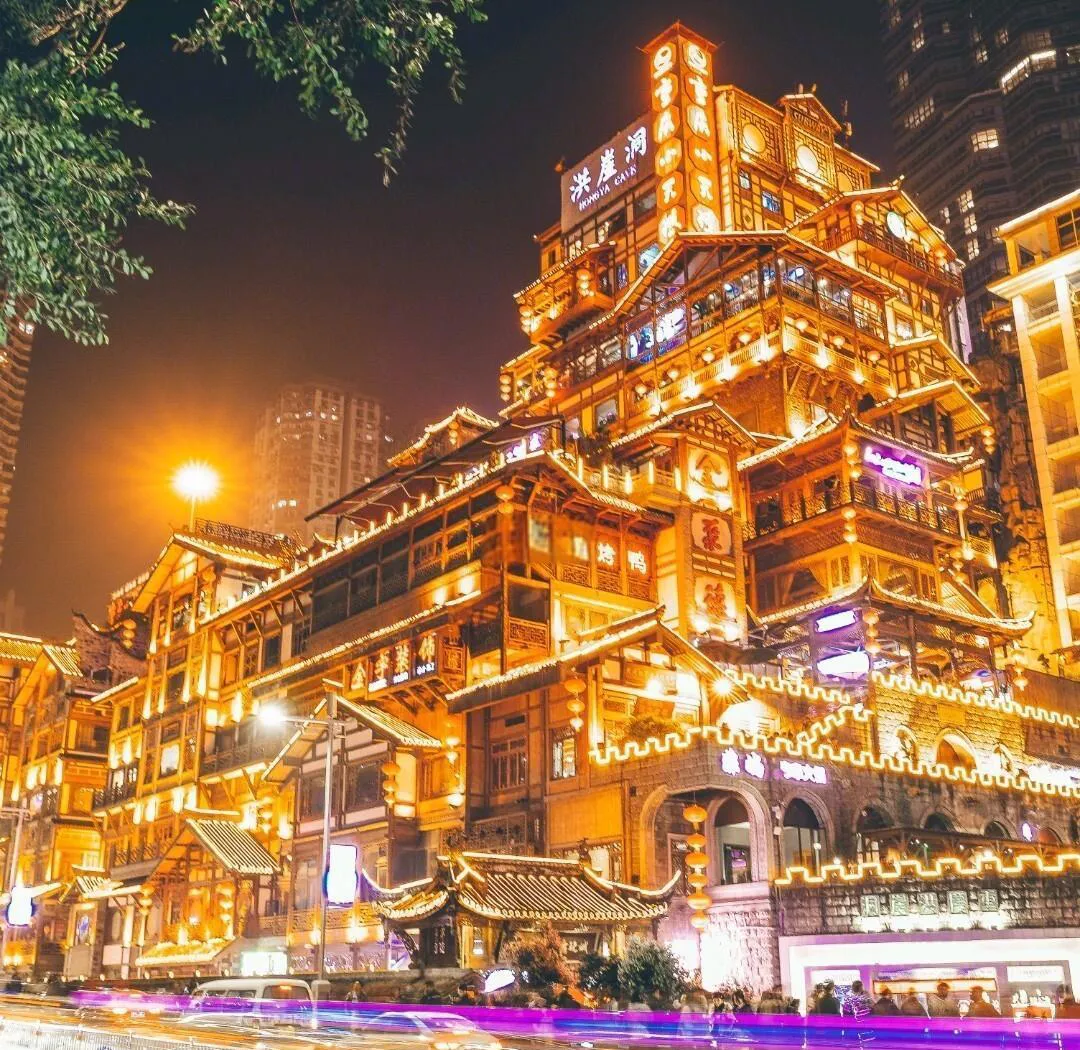
However, Hongyadong's earthquake resistance isn't limited to tradition. During its 2006 reconstruction, a significant portion of the 385 million RMB investment was allocated for structural reinforcement: reinforced concrete frames are hidden beneath the wooden facade, preserving the traditional appearance while meeting modern building seismic standards.
The Chongqing Earthquake Administration's assessment is straightforward: withstand minor earthquakes without damage, be repairable after moderate ones, and remain standing through major ones.
This architectural characteristic of "superb slackness" represents the most compelling fusion of traditional wisdom and modern engineering – a 2,300-year-old Ba-Yu aesthetic on the outside, and 21st-century seismic technology at its core.
The Logic Behind a 385 Million RMB Investment: Tradition Is Not a Replica
The 2006 reconstruction of Hongyadong, with a government investment of 385 million RMB, was not a simple "pseudo-antique" imitation. It was about translating traditional wisdom into the language of modern engineering.
The core challenge faced by the designers: How to restore a stilted building complex on a site with a 75-meter height difference and a 60-degree steep slope, while also accommodating modern commercial functions?
The answer lies in four words: Terraced Construction.
The 3D Labyrinth of "Four Streets, Eight Views"
Hongyadong's enchantment first manifests in its vertical urban planning. The 13 levels (11 above ground + 2 underground) are not merely stacked floors; they are the three-dimensional interweaving of four thematic streets:
1. Paper-Salt River Bar Street (Levels 1-3)
- Location: Lowest levels, facing the river
- Vibe: Dynamic, international
- Highlights: Global chains like the American pirate-themed bar
- Function: Starting point for nightlife
2. Tiancheng Alley Ba-Yu Folk Culture Street (Levels 4-7)
- Location: Mid-section core area
- Vibe: Traditional, artisanal
- Highlights: "Shop in front, workshop in back" model, featuring on-site production of Rongchang pottery and Liangping bamboo curtains
- Function: Cultural experience center
3. Feast Food Street (Levels 8-10)
- Location: Upper-middle section
- Vibe: Bustling, authentic, full of local flavor
- Highlights: Concentrated area for Chongqing hotpot, xiaomian noodles, and sour-spicy rice noodles
- Function: Culinary paradise
4. Exotic City Balcony (Level 11)
- Location: Top level
- Vibe: Modern, scenic
- Highlights: Chongqing's largest urban transportation interchange station, offering 360-degree river views
- Function: Observation deck + transportation hub
These four streets are not arranged in parallel but are connected three-dimensionally via 4 sightseeing elevators, 4 escalators, and 4 aerial walkways. You can enjoy a drink at a bar, take an elevator directly to the 10th floor for hotpot, and then cross an aerial bridge to a handicraft shop in another building – all without ever returning to ground level.
The Physics Behind the 8D Magic
Why can you access roads from both the 11th floor and the 1st floor? The answer: Hongyadong is built against the hillside of the Yuzhong Peninsula. The 11th floor connects to Cangbai Road on the hilltop, while the 1st floor connects to Jiangbin Road by the riverside. Essentially, you are traversing through a mountain.
Practical Visiting Guide (Avoiding the Crowds Version)
- Best Time: Weekdays, 4:00 PM - 6:00 PM (2 hours before sunset)
- Recommended Entry Point: Enter from the 11th floor (Cangbai Road) and explore top-down
- Best Photo Spot: Mid-section of the Qiansimen Bridge for panoramic views
- Secret Passageway: Daijia Alley Cliffside Trail (less crowded, artistic vibe)
- Must-Experience: Level 4 (Ba-Yu Folk Culture Street) for handicrafts + Level 8 for hotpot
Modern Lessons from Ancient Wisdom
Hongyadong proves that tradition is not a specimen in a museum but a living wisdom that can breathe and be commercialized. When stilted buildings meet reinforced concrete, and when Ba-Yu culture encounters global tourists, the result is not conflict but Chongqing's unique urban syntax – composing poetry on a cliff while preserving heritage through commerce.
Ultimately, this "city on the cliff" teaches us that the best form of preservation is not sealing away the past, but allowing tradition to find new modes of expression within a modern context. And Chongqing remains the best instructor for this lesson.
<!-- SEO Keywords: Hongyadong, Hongya Cave, Chongqing night view, stilted buildings, Chuandou wooden frame, Ba-Yu culture, Jialing River, Spirited Away bathhouse, Chongqing architecture, 8D city Chongqing, Cangbai Road, Qiansimen Bridge, Chongqing hotpot, Tiancheng Alley, Paper-Salt River Bar Street, Chongqing folk culture, seismic architecture, terraced construction
SEO Description: Hongyadong: Chongqing's 13-story stilted complex on a cliff, resembling Spirited Away's bathhouse. Discover the seismic secrets of Chuandou wooden frames, explore 4 themed streets across 11 levels, and learn why this 385-million-RMB reconstruction blends 2,300-year-old Ba-Yu wisdom with modern engineering. Complete visiting guide included. -->
No comments yet