Liberation Monument: From Wartime Symbol to Western China's "First Commercial Street"
The Origins of a Spiritual Bastion
Standing in Liberation Monument Square and gazing up at this 27.5-meter-tall white monument, it's difficult to imagine its original form. In 1941, Chongqing was enduring one of the darkest periods in modern Chinese history. Japanese bombers circled the city almost daily, while the Nationalist government, having relocated its capital, had established this mountainous city as the wartime provisional capital.
At this critical juncture for the nation's survival, Chongqing needed more than just a building; it needed a symbol. On New Year's Eve, December 31, 1941, a pagoda-like structure named the "Spiritual Bastion" was completed in Duyou Street Square (the present-day location of the Liberation Monument). Its design was imbued with wartime symbolism: its total height was 7 zhang and 7 chi (approximately 23.3 meters). This number was not arbitrary; it deliberately corresponded to the "July 7th Incident"—the Marco Polo Bridge Incident on July 7, 1937, which marked the beginning of China's full-scale resistance against Japan.
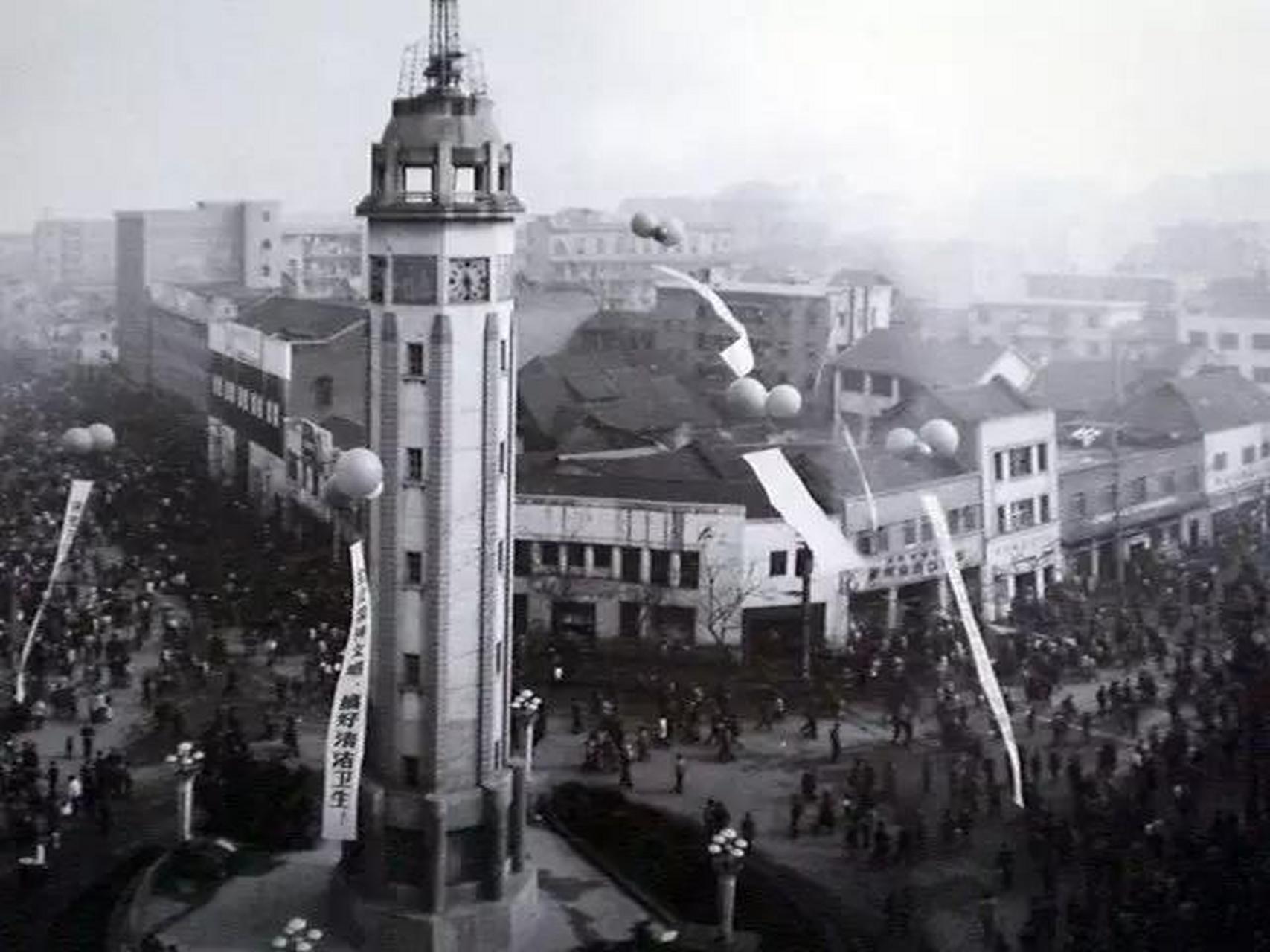
The name "Spiritual Bastion" itself revealed its mission. In the Chinese context, "bastion" signifies a strong defensive fortification, while "spiritual" points to national will. This five-story, square, blockhouse-style wooden structure was painted black—not for aesthetics, but for camouflage, to reduce its visibility during Japanese bombing raids. It stood on Chongqing's busiest street, conveying the same message to every passerby: resist to the end.
How did Chongqing's residents view this structure? It was not merely a landmark; it was a psychological anchor. On days when air raid sirens sounded frequently, seeing the "Spiritual Bastion" still standing meant hope remained. This building carried the collective memory and indomitable will of a people during their most difficult time.
The Political History Behind Its Renaming
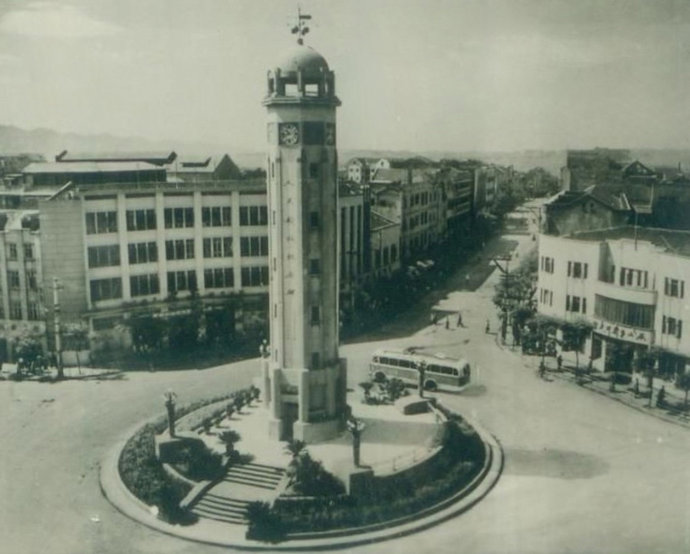
In August 1945, Japan surrendered, and the war of resistance ended. Chongqing's "Spiritual Bastion" had fulfilled its wartime purpose, but the city needed a new symbol to commemorate this hard-won victory. On October 31, 1946, a new monument, laid at the original site, was named the "Monument to the Victory in the War of Resistance."
This new monument was constructed entirely of reinforced concrete, featuring an octagonal column body with a helmet-shaped top, standing 27.5 meters tall—more solid and permanent than the original wooden "Spiritual Bastion." It was completed in August 1947, becoming China's only national-level monument commemorating the victory in the War of Resistance Against Japan at that time.
However, historical shifts arrived swiftly. On November 30, 1949, Chongqing was liberated. With the change in political power, the monument's meaning needed redefinition. The Southwest Military and Political Commission decided to modify the "Monument to the Victory in the War of Resistance," and Chairman Liu Bocheng personally inscribed its new name.
"People's Liberation Monument"—these seven characters replaced the former name. The shift from "Victory in the War of Resistance" to "People's Liberation" reflected an ideological transformation: the former commemorated a national military victory, while the latter emphasized the social changes brought by the new political order. For Western readers, this phenomenon of renaming was not uncommon among socialist states in the mid-20th century—symbols in public spaces were often reinterpreted following political transitions.
Liu Bocheng's inscription remains clearly visible today, and the abbreviated name "Liberation Monument" gradually became the most familiar designation for Chongqing's residents. While the name changed, the building's status as a civic landmark in people's hearts never wavered.
The Transformation into a Commercial Marvel
If history had paused in 1949, the Liberation Monument might have remained solely a memorial. However, China's Reform and Opening-Up policy gave it a second life—this time, a commercial one.
In 1997, the Liberation Monument's major intersection (where Minquan Road, Minzu Road, and Zourong Road meet) was converted into Western China's first commercial pedestrian street. This timing is significant: the same year Hong Kong returned to China, Chongqing began its own "commercial return." The 22,400-square-meter pedestrian zone completely transformed the area's character—from a solemn commemorative space into a bustling center of commerce.
The speed of transformation was astonishing. On December 19, 2004, the Liberation Monument Commercial and Trade Center achieved a total commercial sales volume of 20.737 billion yuan and a total retail sales of consumer goods of 10.031 billion yuan, making it Western China's first "Double-Hundred-Billion" commercial district. Behind these figures lies an economic miracle: a former political landmark had become a commercial engine.
"First Street of the West," "One of China's Ten New Landmark Business Districts," "National Characteristic Cultural Square"—accolades followed one after another. By 2013, the Liberation Monument Central Business District's total retail sales of consumer goods reached 41.4 billion yuan, with a GDP of 41.2 billion yuan, firmly ranking first among Chongqing's commercial districts. Fortune Global 500 companies established offices, financial institutions clustered, transforming the area from a mere tourist attraction into the financial heart of Chongqing.
Loss and Preservation of Historical Landmarks
The Liberation Monument's evolution was accompanied by the disappearance and rebirth of cultural sites. Fuzichi (Chongqing's earliest Confucian Temple, later an art gallery) gave way to the Chongqing World Trade Center. The Guotai Theater (a cultural sanctuary during the war) underwent multiple name changes and reconstructions before being demolished in 2007. Yet, memory persists in new forms: today's Liberation Monument Pedestrian Street hosts 14 key cultural heritage protection units, including the former site of the Sino-British Liaison Office and General Ba Manzi's Tomb.
Suggested Experience Today
How to experience this "Monument of Two Faces"? Visit between 7-9 AM to avoid crowds and feel its solemnity; stroll the pedestrian street in the evening to witness its commercial vibrancy. Be sure to visit Bayi Road Snack Street for authentic local delicacies. The Hongyadong night view is a 10-minute walk from the monument. Avoid weekend peaks, and this monument will reveal all the historical layers of Chongqing to you.
The story of the Liberation Monument is a microcosm of Chongqing—a city capable of rebuilding from the ashes of war, transforming from a planned to a market economy, and finding balance between tradition and modernity. It reminds us that a landmark's meaning is never fixed: yesterday it symbolized the spirit of resistance, today it witnesses commercial prosperity, and tomorrow it may carry new collective memories.
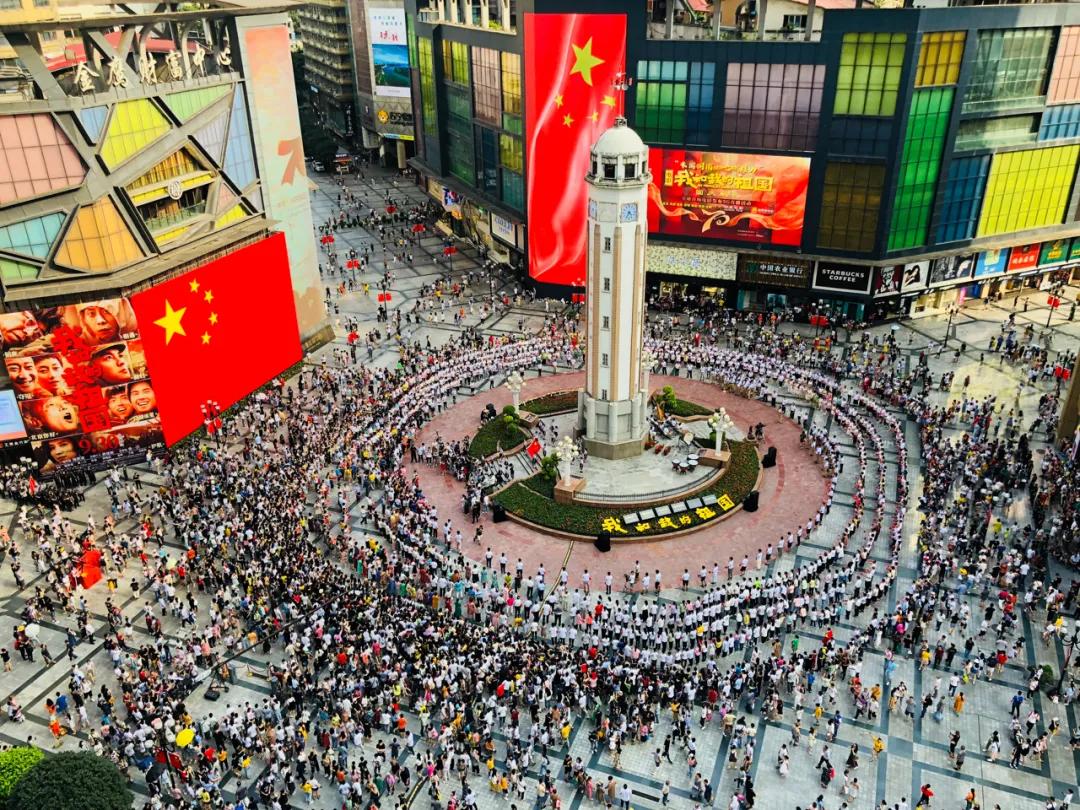
For visitors, the Liberation Monument offers the most direct entry point for understanding Chongqing: look up at the monument to read history; look around to see the present. Its evolution from a war monument to the "First Street of the West" is not merely a functional shift for a building, but a concrete representation of a city's and a nation's developmental trajectory.
In Chongqing, history is never forgotten, only reinterpreted. And the Liberation Monument has always stood there, witnessing each reinterpretation.
No comments yet