The Dazu Rock Carvings: Stories in Stone
An Invitation from World Heritage: UNESCO Recognition
On December 1, 1999, at the 23rd session of the UNESCO World Heritage Committee held in Marrakech, Morocco, a cultural heritage nomination from China was unanimously approved—the Dazu Rock Carvings were officially inscribed on the World Heritage List. Following the Mogao Caves of Dunhuang in 1987, this became China's second rock carving site to receive this honor, signifying international recognition of the highest achievements of China's late-period grotto art.
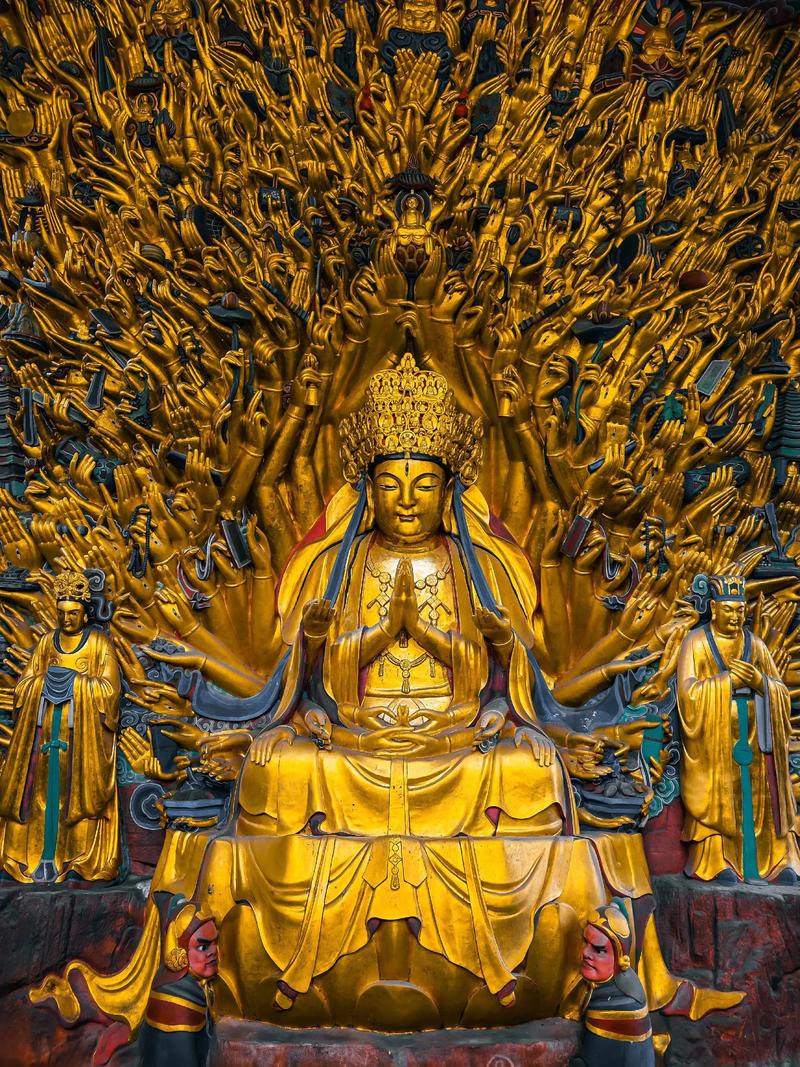
The World Heritage Committee's evaluation succinctly captured the core value of the Dazu Rock Carvings: "The steep hillsides of the Dazu area contain an exceptional series of rock carvings dating from the 9th to the 13th centuries. They are remarkable for their aesthetic quality, their rich diversity of subject matter, both secular and religious, and the light that they shed on everyday life in China during this period. They provide outstanding evidence of the harmonious synthesis of Buddhism, Taoism, and Confucianism."
This assessment was based on three stringent World Heritage criteria:
- Represent a masterpiece of human creative genius (Criterion i): The Dazu Rock Carvings represent the pinnacle of world grotto art from the 9th to 13th centuries, with their carving techniques, compositional design, and expressive methods reaching unprecedented heights.
- Exhibit an important interchange of human values (Criterion ii): As a key node in the southward transmission of Chinese grotto art from the north, the Dazu Rock Carvings profoundly influenced the development of religious art in East Asia.
- Be directly or tangibly associated with events or living traditions (Criterion vi): The carvings authentically record the philosophical thought, religious beliefs, and daily life of Chinese society during the Tang and Song dynasties, serving as precious physical evidence for studying cultural integration in that period.
For international visitors, this inscription is not only a quality assurance but also a coordinate point for understanding the developmental trajectory of Chinese grotto art. Together with Dunhuang, Yungang, and Longmen Grottoes, Dazu forms a complete history of Chinese grotto art. As the "final masterpiece," it represents the maturation and transformation of this art form during the Song Dynasty.
Historical Context: The Development of Carving Art from the Tang to the Song Dynasties
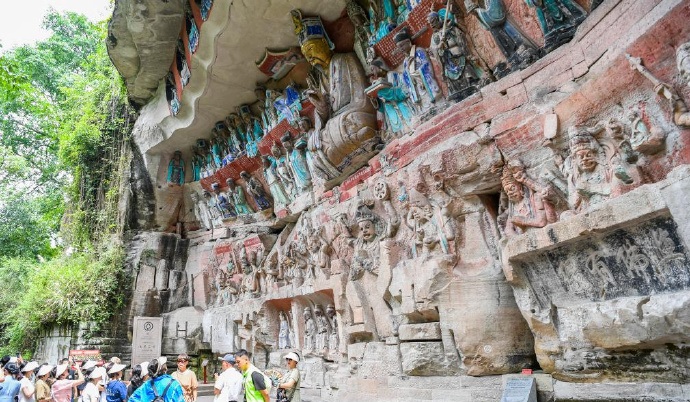
The creation of the Dazu Rock Carvings spans five centuries (from the mid-7th to the 13th century), clearly illustrating the transformation of Chinese grotto art from centralized religious expression to popular secularization.
Early Tang Foundation Period (650-750 AD): Rock carving art, following the spread of Buddhism, entered the Sichuan Basin. Early works, such as the cliff carvings at Jianshanzi (Yonghui era, 650-655 AD), show clear influences of northern styles: the Buddha's face is full, garment folds are simple, and the layout is rigorous. Carvings from this period are generally smaller in scale, often funded by the nobility or local officials.
Late Tang to Five Dynasties Transition Period (850-960 AD): Following the An Lushan Rebellion, large-scale carving activities declined in the north, and the artistic center shifted southward. Dazu entered its first peak of development, with large-scale carving beginning at the Beishan (North Hill) complex. Artistic styles began to show localized characteristics: statue proportions became more anatomically accurate, clothing details increased, and background decorations began incorporating elements from the Bashu region.
Song Dynasty Golden Age (960-1279 AD): This was the golden age of Dazu Rock Carvings, epitomized by the Baodingshan (Precious Summit Hill) complex. Three key shifts define this period:
- Technological Innovation: Carving depth evolved from low relief to high relief and even sculpture in the round, significantly enhancing spatial depth.
- Thematic Expansion: Subjects expanded from purely Buddhist themes to include Buddhism, Taoism, and Confucianism presented side-by-side, with a large number of secular life scenes.
- Narrative Structure: The focus shifted from single statues to continuous narrative sequences, such as the "Herding the Ox" and "The Sutra on the Profound Kindness of Parents" sequences at Baodingshan.
Data Comparison Reveals Developmental Trajectory:
- Proportion of Tang Dynasty statues: approx. 15% (style: rigorous, strongly religious)
- Proportion of Song Dynasty statues: approx. 70% (style: vivid, rich in life)
- Maximum height of single statue: increased from 3 meters in the Tang to 7 meters in the Song (Thousand-Armed Guanyin)
- Carving detail: Details such as fingers and garment folds in Song Dynasty statues are about 300% more refined than their Tang counterparts
This development reflects the cultural transformation of Chinese society from the Tang to the Song dynasties: religious art gradually moved out of monasteries and integrated into popular life, becoming a tool for public education. The Dazu Rock Carvings thus serve as physical evidence of the "secular turn" in Chinese art history.
Cultural Fusion: Artistic Expression of Harmony Among Buddhism, Taoism, and Confucianism
The most unique cultural value of the Dazu Rock Carvings lies in their presentation of "the harmony of the three teachings," a rare phenomenon in the history of world religious art. This fusion is not mere juxtaposition but a deep philosophical integration.
Shizhuanshan Carvings: Evidence of Coexistence: In Niche No. 6 at Shizhuanshan (Stone Seal Hill), statues of Confucius, Laozi, and Sakyamuni are enshrined side by side. This arrangement breaks religious boundaries, reflecting the intellectual reality of Song Dynasty China: scholars often embraced all three systems of thought simultaneously—Buddhism offered solace for the afterlife, Taoism focused on harmony with nature, and Confucianism governed present-day ethics.
Analysis of the Fusion Mechanism:
- Inter-borrowing of Iconographic Symbols: The Buddhist lotus throne was adopted for Taoist statues; Confucian ritual vessels appeared in Buddhist scenes.
- Sharing of Narrative Themes: Filial piety (a core Confucian value) became the theme of the Buddhist "Sutra on the Profound Kindness of Parents" sequence; Taoist immortals participated in Buddhist assemblies.
- Equality in Spatial Layout: Statues of the three teachings enjoyed equal scale and placement within the grottoes, with no hierarchy.
The deeper significance of this fusion is that it demonstrates the inclusiveness of Chinese culture during the Tang and Song periods. Different religious systems were not in competition but were complementary sources of thought. For modern multicultural societies, the Dazu Rock Carvings offer a historical model for religious harmony—not through doctrinal unity, but through artistic expression that found a common value base.
Self-Drive & Visit Planning: Itinerary and Guide
Core Route: Downtown Chongqing → Yu-Rong Expressway → Dazu Exit → Baodingshan Rock Carvings (Drive time: 1.5 hours)
- Time Allocation: Baodingshan: 3 hours + Beishan: 2 hours + Museum: 1 hour
- Ticketing Strategy: Combo ticket (Baodingshan + Beishan): 170 RMB. Book online in advance.
- Best Time Slot: Arrive before 9:00 AM on weekdays to avoid tour group crowds.
Must-See Sequence: Baodingshan Thousand-Armed Guanyin → Reclining Buddha (Sakyamuni Entering Nirvana) → Herding the Ox → Beishan Zhuanlun Jingzang Cave (Cave of the Turning Prayer Wheel)
Art Interpretation: The Cultural Symbolism of the Thousand-Armed Guanyin
The Thousand-Armed Guanyin at Baodingshan (7.7 meters tall) actually has 1,007 hands, each holding a different ritual implement. The deeper meaning of this statue:
- Quantified Expression of Compassion: The thousand arms symbolize Guanyin Bodhisattva's limitless capacity to offer salvation.
- Display of Technical Pinnacle: Each hand has a unique posture, demonstrating the precision of Song Dynasty carving techniques.
- Embodiment of Cultural Fusion: The implements include symbols from Buddhism, Taoism, Confucianism, and folk beliefs.
- Revelation of Conservation Value: The eight-year restoration project (2008-2015), using traditional craftsmanship combined with modern technology, became a model case for cultural heritage conservation.
The Thousand-Armed Guanyin is not merely a Buddhist statue; it is a material carrier of Chinese craftsmanship, religious inclusiveness, and cultural transmission.
<!-- SEO Keywords: Dazu Rock Carvings, UNESCO World Heritage, Baodingshan, Beishan rock carvings, Chongqing heritage, Thousand-Armed Guanyin, Song Dynasty art, Three Teachings harmony, Buddhism Taoism Confucianism, China grotto art, Chongqing day trip, UNESCO China, Tang Dynasty carvings, Song Dynasty sculptures, Dazu travel guide, religious harmony art, China cultural heritage, Chinese sculpture
SEO Description: Explore the Dazu Rock Carvings—UNESCO World Heritage site featuring 9th-13th century Buddhist, Taoist & Confucian sculptures. Discover the iconic Thousand-Armed Guanyin at Baodingshan, the Herding the Ox sequence, and the harmonious "Three Teachings" carvings. Complete guide to China's second-greatest rock art site from Chongqing. -->
No comments yet