🏔️ Exploring the Magical Mountain City: A Time-Travel Journey Through Chongqing
Who it's for: First-time visitors and seasoned travelers ready to experience Chongqing's 8D magic — where maps fail, buildings defy gravity, and every corner holds a surprise.
Core Coverage: Liziba Monorail → Hongyadong → Chaotianmen → Yangtze River Cableway → Mountain City Walkways → Wulong → Cultural Decoding → 4-Day Itinerary
This is your complete time-travel journey through Chongqing's layered reality — a city that isn't built on mountains but is the mountains themselves. From engineering marvels to historic dock memories, from stilted house spectacles to bridge-dense skylines.
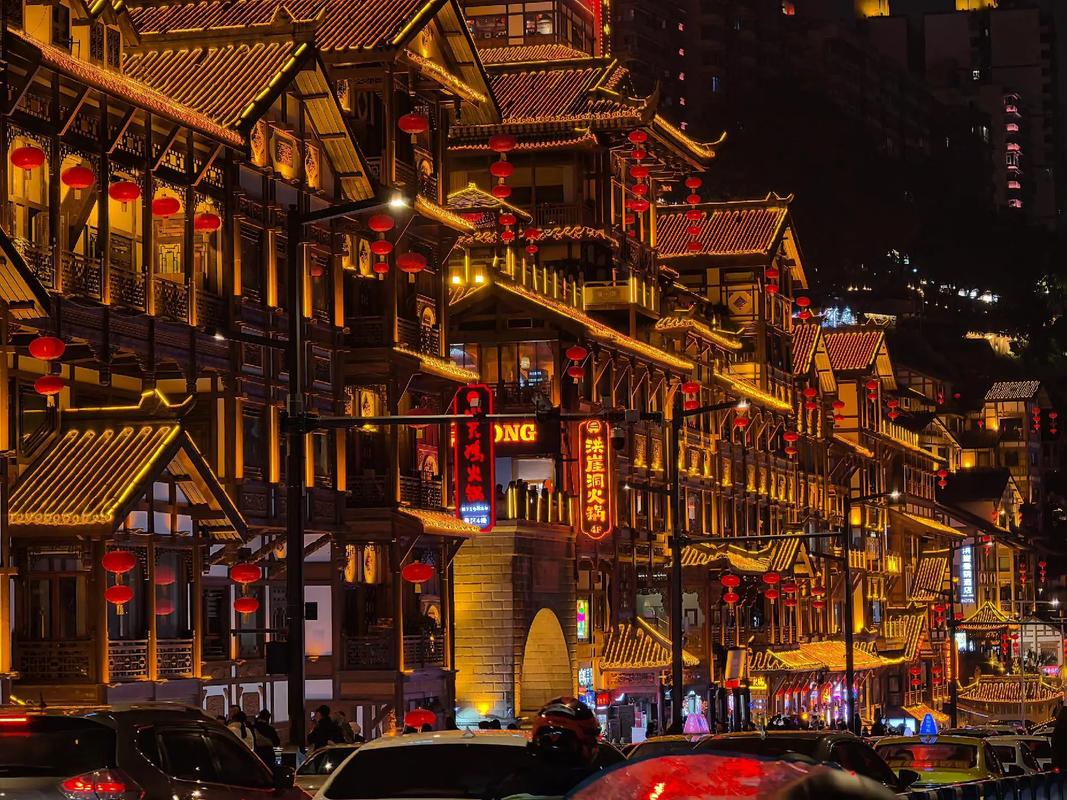
✈️ Part One: First Impressions — The 3D Awakening
Highlights
As the plane began its descent, I peered out the window — and was stunned.
What greeted me wasn't the familiar grid of plains, but a three-dimensional, layered constellation of lights. Ridges resembled the spines of giant beasts, with city lights climbing, hanging, and stacking along the mountain slopes, like a frenzied game of building blocks. This was my first glimpse of Chongqing: a world that defies being defined by two-dimensional maps.
I later learned that 75% of this city is mountainous terrain. It isn't a city built on mountains; it's a city where the mountains are the city itself. What you think is a "skyscraper" might only be the starting point halfway up a slope; that "street" you see might be winding twenty floors above your head.
If you've seen Hayao Miyazaki's Spirited Away, congratulations — you've already had a sneak peek of Chongqing in your imagination. When the stilted houses of Hongyadong light up at night, the mysterious town Chihiro stumbled into steps from animation into reality. But Chongqing is even more fantastical: there's no magic here, only engineering marvels born from humanity's struggle to survive on steep terrain.
Welcome to the 8D city. Here, your navigation app will crash, your sense of direction will fail, but your senses will awaken like never before.
🚇 Part Two: Spatial Magic — An Urban Adventure Above and Below
1. Subway Through a Building: Engineering Marvel and Poetry of Daily Life
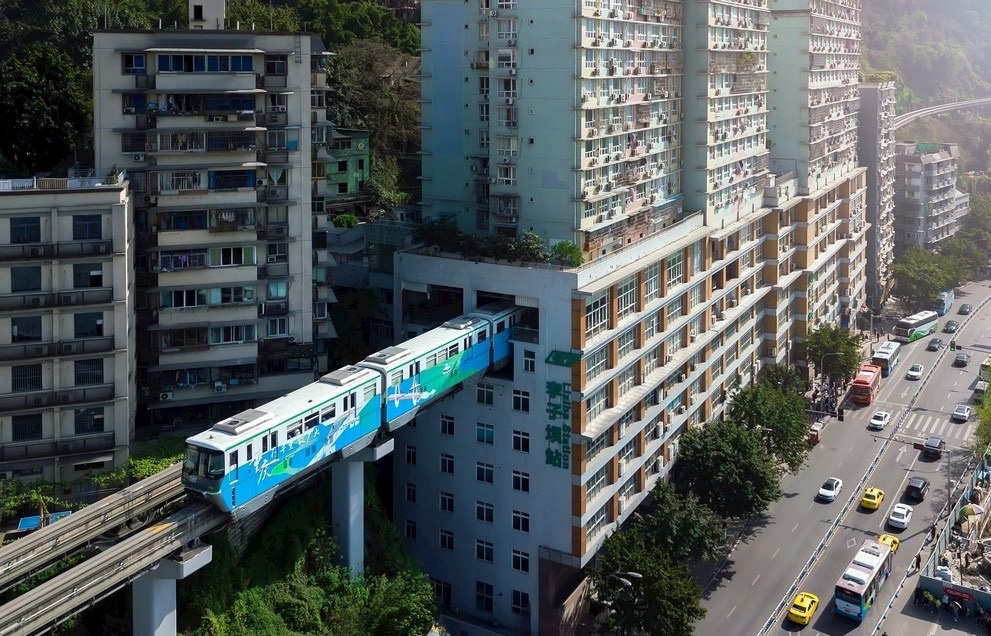
Standing at the Liziba viewing platform, I waited for the "subway train that passes through a wall." Line 2 approached — it didn't detour or climb; it drove straight into the "belly" of that residential building.
Life goes on inside the building while the train passes through, neither disturbing the other. This isn't just an engineering feat; it's a Chongqing philosophy of life: if a mountain blocks the path, make the path go through the mountain; if a building blocks the track, make the track go through the building. Pragmatism here ascends to a form of magical realism.
2. The Stilted House Spectacle: Hongyadong's Day-and-Night Magic
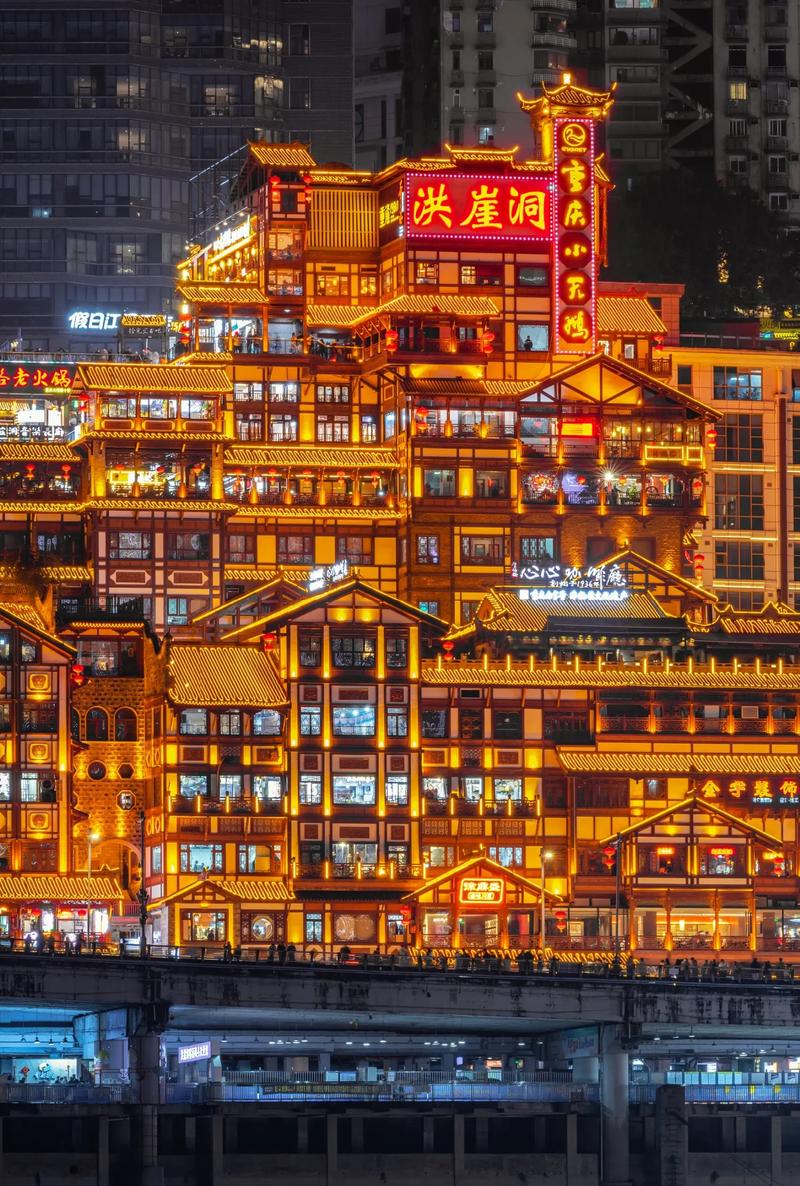
By day, Hongyadong is an 11-story vertical old street. You enter at the top floor, descend level by level, and eventually find yourself standing by the riverside. But at night — night is its crowning moment.
A thousand lanterns illuminate simultaneously, transforming the cluster of stilted houses into a golden palace suspended on the cliff face. The reflection in the Jialing River doubles the spectacle, blurring the line between reality and illusion.
3. Navigation Failure and a Directional Revolution
When asking for directions in Chongqing, locals don't say "east, south, west, north"; they say "up, down, left, right." Because there is no flat plane here, only three-dimensional space.
My most surreal moment: following navigation, I entered the first floor of a building, only to exit onto a 22nd-floor skywalk. Flat maps are a failed attempt by two-dimensional creatures to understand a three-dimensional world.
4. City of Bridges: Spanning the Impossible
Chongqing boasts over 13,000 bridges, holding 17 world records. The Qiansimen Bridge arches over the Jialing River like a steel rainbow, connecting the classical charm of Hongyadong with the modernity of Jiangbeizui.
Yet the most astonishing aspect isn't a single bridge, but their sheer density — in this city carved by rivers, bridges aren't ornaments; they are its lifeblood.
⏳ Part Three: Time Travel — A Corridor of History Where Past Meets Present
1. Wartime Provisional Capital: Layers of Memory
Beneath the Liberation Monument, inscriptions commemorating the victory in the War of Resistance remain clear. Just steps away, the cells of Baigongguan stand silent — once holding Communist prisoners, later reformed Kuomintang war criminals. Same space, different times; history here is layered like Chongqing's mountains.
2. A Millennium of Docks: The Water Transport History of Chaotianmen
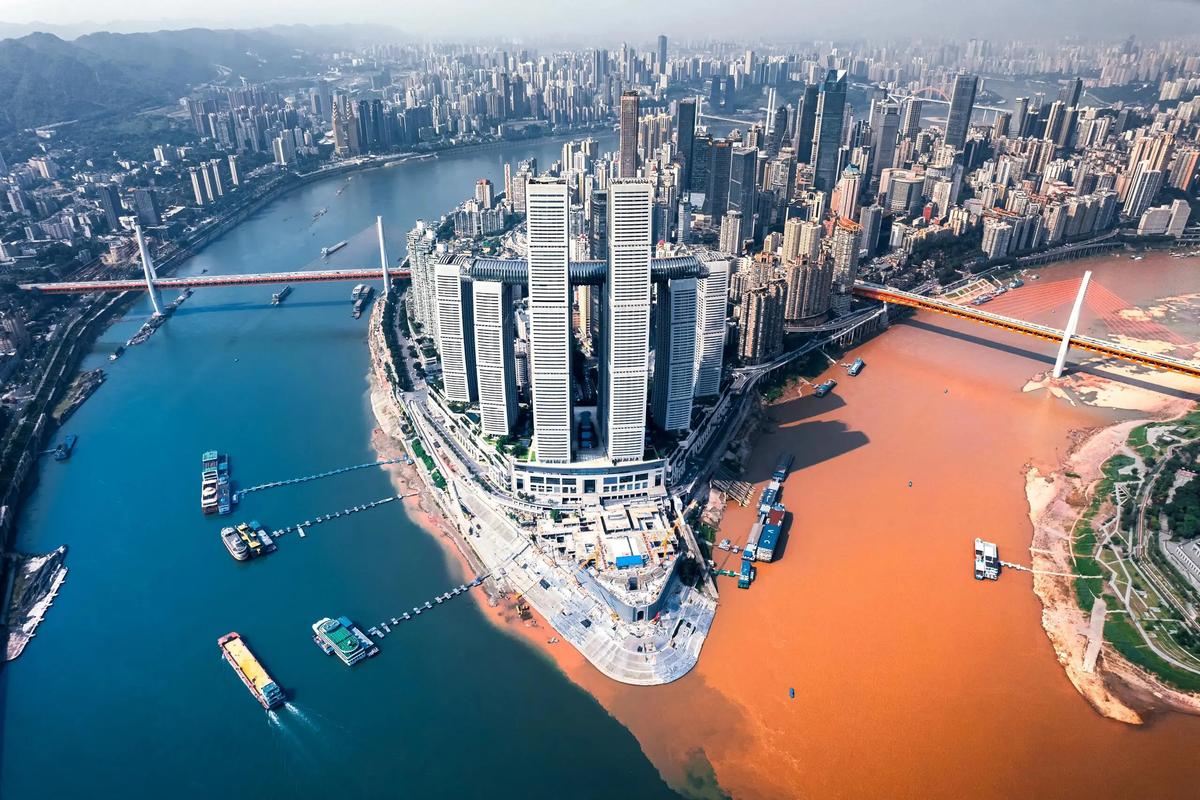
The name "Chaotianmen" dates back to the Ming Dynasty: imperial edicts arrived from Nanjing via the Yangtze, and people gathered here facing east to receive them. Today, the "Sails" of the Raffles City complex engage in a dialogue with the ancient docks; the sailing ships have turned into glass curtain walls, but the river still flows east.
3. Mountain City Walkways: The Pulse of Old Chongqing
Walking on the third historic walkway, the stone slabs are polished smooth by a century of footsteps. Clotheslines stretch from old windows, and the clatter of mahjong tiles drifts from deep within the alleys. This is the living texture of the mountain city — slow, tangible, brimming with human warmth.
4. A Dialogue Across Time: Modern Rebirth of Traditional Neighborhoods
In the revitalized Lower Haoli Old Street, I witnessed the most moving dialogue between times: blue-brick old houses transformed into art spaces, graffiti climbing up weathered walls, the aroma of coffee mingling with the scent of tea from old teahouses.
Chongqing doesn't "demolish the old to build the new"; it practices "symbiosis of old and new." Every historic building tells a story: where it came from, and where it's going.
🗺️ Part Four: Travel Guide — A Time-Travel Itinerary
Classic 4-Day Route (Abridged)
- D1 Initial Magic: Liberation Monument → Bayi Food Street → Raffles City → Hongyadong Night View
- D2 Cultural Immersion: Great Hall of the People → Three Gorges Museum → Guanyinqiao → Beichuang Cultural & Creative Park
- D3 Time Travel: Mountain City Walkways → Yangtze River Cableway → Longmenhao Old Street → Lower Haoli
- D4 Natural Wonders: Wulong Three Natural Bridges → Fairy Mountain
Signature Transport Trio
- Yangtze River Cableway: A 4-minute 30-second trip through time, from old town to new.
- Mountain City Taxis: Locally dubbed "yellow Ferraris," offering a 3D rollercoaster ride.
- Sightseeing by Metro: The entire Line 2 is a moving viewing platform.
Best Photography Moments
- Liziba: 3-5 PM, capturing the train passing through the building with slanting light.
- Hongyadong: 30 minutes after sunset, during the blue hour when lights first glow.
- Nanbin Road: Evening, for the silhouette of Raffles City against the sky — a dialogue between modern and classical.
🎭 Part Five: Cultural Decoding — Understanding the Soul of the Mountain City
Highlights
The character of Chongqing people is a duet of mountain and river: the mountain's resilience makes them climb slopes and ascend stairs without complaint, while the river's flow makes them open their arms to outsiders.
Hot pot isn't just a dish; it's a philosophy — in the nine-square grid, different ingredients maintain their individuality within the same boiling broth, yet blend together in the numbing spiciness. This is Chongqing: diverse yet harmonious, united without uniformity.
Chongqing's future development focuses on five themes: the Three Gorges, the Mountain City, Culture, Hot Springs, and Rural Tourism. But its true foundation remains: preserving its soul of mountains and waters amidst modernization.
🌈 Part Six: Conclusion — An Invitation to Your Journey
Chongqing isn't just a place you go to; it's a state you experience — getting lost in three-dimensional space, finding clarity amidst layers of history and modernity, and being reborn in a bubbling, spicy cauldron.
Ready to enter the time-space maze of this 8D magical mountain city? Your journey begins now.
No comments yet