🍜 Chongqing Noodles — A Bowl of Culinary Craft
Who it's for: Anyone curious about Chongqing noodles — whether you're trying them for the first time or want to understand the craft behind the bowl.
Core Coverage: Alkaline Noodles → Chili Oil → 13 Seasonings → Wan Za Mian (Pea & Minced Pork Noodles) → Ordering Codes → Tasting Ritual
This guide decodes Chongqing noodles from the ground up — the science of alkaline noodles, the art of balancing 13 seasonings, the secret of three-pour chili oil, and the ordering codes that let you customize every bowl. Everything you need to appreciate one of Chongqing's most beloved culinary traditions.
🌅 I. A City Wakes to the Aroma of Chili Oil
At 6 AM, Chongqing's streets and alleys begin to stir. It's not the aroma of coffee, but the layered scent of chili oil, Sichuan peppercorns, and sesame paste wafting from inconspicuous noodle shops. Office workers, students, and elderly people after their morning exercises gather on simple plastic stools, each facing a bowl of bright red, flavorful noodles.
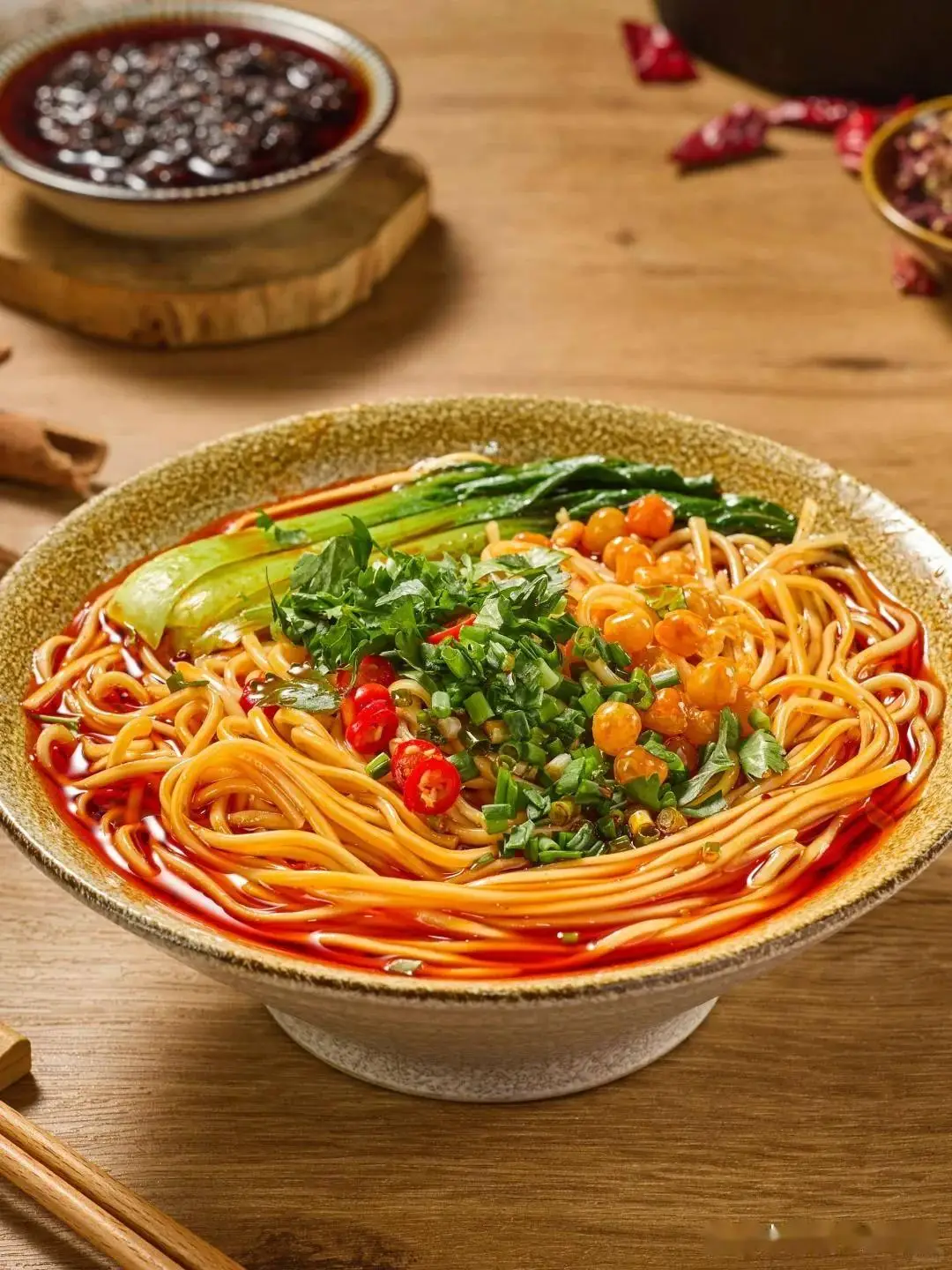
This isn't fast food — it's the precise art of taste composition. Unlike Italian pasta where the noodles take center stage, or Japanese ramen defined by its broth, Chongqing noodles take a completely different path: the sauce is the soul. What appears to be a simple bowl of noodles is, in fact, the result of a meticulous ratio of thirteen seasonings, the unique processing of alkaline noodles, and the possibility of dozens of personalized combinations.
For international diners, understanding Chongqing noodles means first letting go of the "noodles + topping" mindset. Here, the noodles are the medium, the seasoning is the lead, and the toppings are merely optional enhancements. This embodies a culinary philosophy where complexity is hidden beneath simplicity.
🧬 II. The Philosophy of Noodles: The Resilience of Alkaline Noodles
Highlights
The noodles for Chongqing noodles must be fresh, hand-pulled "water noodles" — alkaline noodles made daily. Alkaline water (food-grade lye water) is the secret weapon: it makes the noodles more chewy, more resilient to cooking, and helps neutralize the sharpness of the chili, creating a unique "backbone."
Shape Options
- Thin Noodles: Similar to spaghetti — they cling to the sauce most effectively.
- Wide Noodles (Chive Leaf Style): Similar to fettuccine — offering a fuller mouthfeel.
- Standard Noodles: A balanced choice between the two.
The Art of Cooking
- "Ti Huang" (提黄): Cooked for 1 minute, slightly underdone, for maximum chewiness (similar to al dente).
- Standard Method: 1-2 minutes, then rinsed in cold water to maintain firmness.
- Customized Doneness: "Gan Liu" (dry tossed noodles) are cooked to about 80% doneness; soup noodles to about 90%.
Alkaline noodles have low expansion when heated, allowing them to perfectly support the rich sauce without becoming mushy. This is the physical foundation that sets Chongqing noodles apart from other noodle dishes.
🧪 III. Symphony of Seasonings: The Art of Balancing 13 Flavors
Highlights
The soul of Chongqing noodles isn't in the noodles, but in the precise ratio of thirteen seasonings at the bottom of the bowl. It's a symphony of tastes where every note must be perfectly in tune.
The Soul Within the Soul: Chili Oil
The Three-Part Chili Blends
- Chao Tian Jiao (朝天椒) (Heat): Local to Chongqing, the spiciest.
- Er Jing Tiao (二荆条) (Color): From Sichuan, gives a vibrant red hue.
- Zi Dan Tou (子弹头) (Aroma): From Guizhou, provides intense fragrance.
The Craft of Infusion: The Three-Pour, Three-Heat Method
- First Pour: Low-temperature oil moistens the chili powder.
- Second Pour: Medium-temperature oil releases the aroma; add sesame seeds.
- Third Pour: High-temperature oil seals in the flavors.
The crucial final step: Cover and let it rest overnight for the flavors to mature.
The Five Foundational Seasonings
- Ginger & Garlic Water (1:1 ratio): The base for removing gaminess and enhancing aroma.
- Sesame Paste (diluted 1:1): Adds a mellow thickness.
- Ground Sichuan Peppercorn: Provides the signature 50Hz numbing vibration.
- Cooked Vegetable Oil: The carrier for the aroma of dry-roasted peanuts.
- Ya Cai (芽菜 Preserved Mustard Greens): The savory-salty foundation.
For International Readers: These thirteen seasonings aren't haphazardly thrown together — they represent a golden ratio refined over a century. The balance of spicy, numbing, savory, fragrant, and salty is the core algorithm of Chongqing noodles.
🥩 IV. The Topping Universe: From Plain Noodles to Pea & Pork Noodles
Highlights
On top of the seasoning base, toppings are optional upgrades:
- Basic — Plain Noodles (Su Xiao Mian / 素小面): The pure test of seasoning artistry.
- Classic — Pea & Minced Pork Noodles (Wan Za Mian / 豌杂面): The creaminess of mashed peas + the savory-saltiness of minced pork. Top recommendation for first-timers.
- Upgraded Options:
- Beef Noodles — The richness of braised beef.
- Pork Intestine Noodles — The soft tenderness of stewed intestines.
- Trotters Noodles — The luxurious richness of collagen.
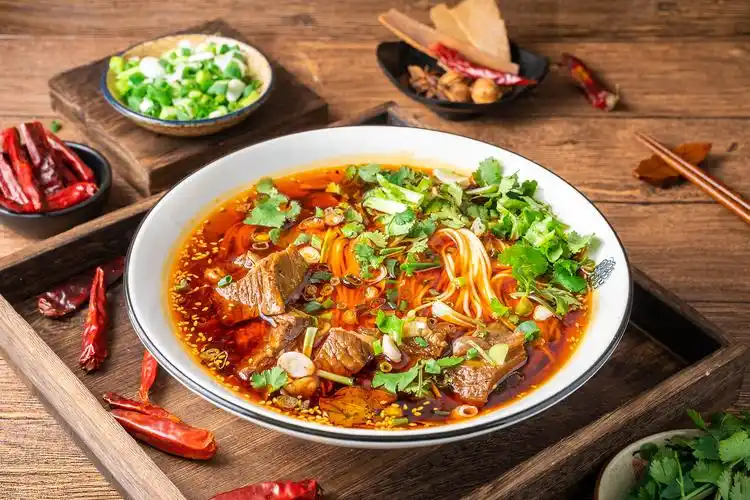
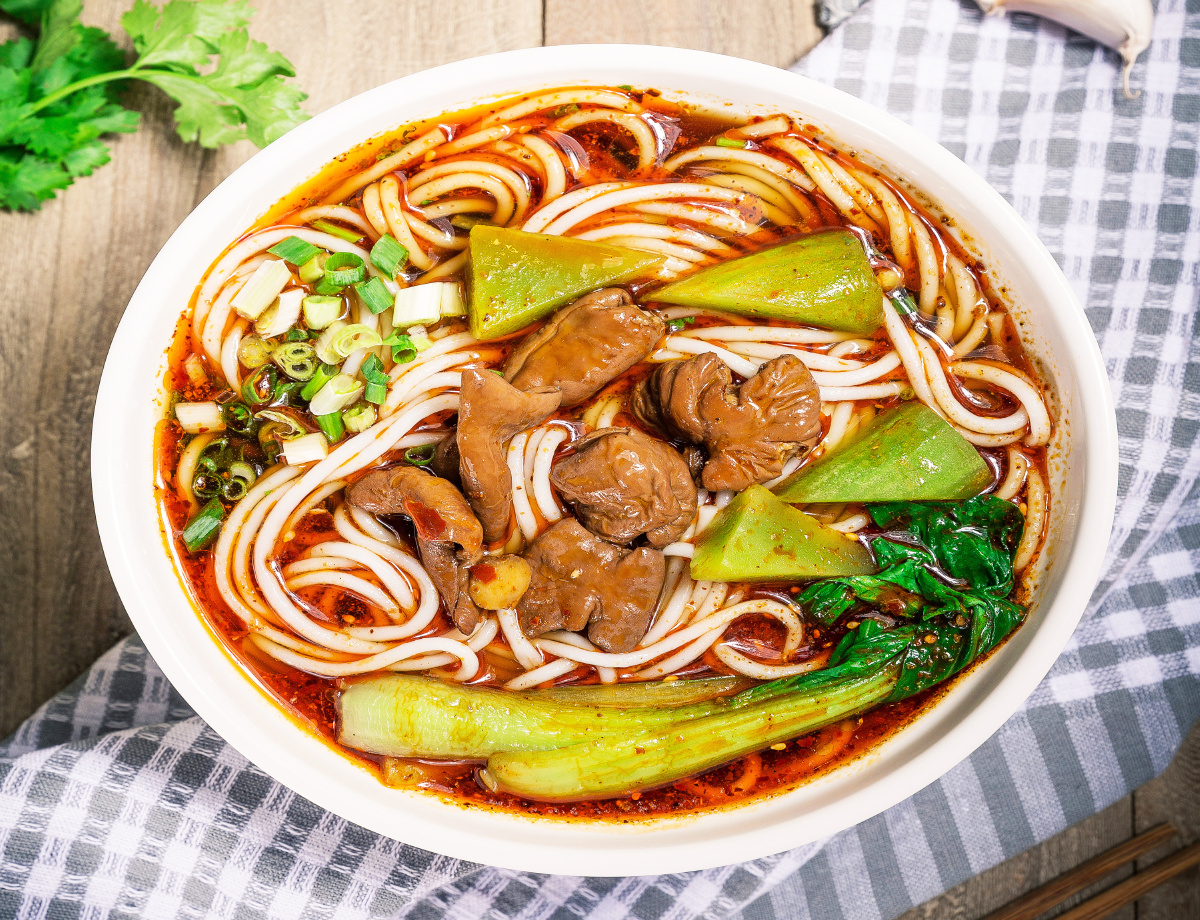
Recommendations for First-Time Tasters
- Start with Pea & Minced Pork Noodles — the most balanced choice.
- Prefer a pure seasoning experience → Plain Noodles.
- Seek rich texture → Beef or Pork Intestine Noodles.
Toppings are not the star, but an "amplifier" for the seasonings. A good topping enhances the overall layers without overshadowing the essence of the sauce.
🔢 V. Customization Culture: Your Noodles, Your Rules
Highlights
Ordering Chongqing noodles involves a secret "code" system:
Core Codes
- "Gan Liu" (干熘): Dry tossed noodles, no soup.
- "Jia Qing" (加青): Extra vegetables.
- "Zhong La" (重辣): Extra spicy (more chili oil).
- "Ti Huang" (提黄): Noodles cooked firmer.
Mastering these four terms allows you to customize your perfect bowl of noodles. Dozens of combinations hinge on adjusting these four variables.
🍴 VI. The Tasting Ritual: A Five-Step Guide
Highlights
- Sight: Admire the bright red broth with green scallion accents.
- Smell: Inhale the complex aroma of chili, peppercorn, and sesame.
- Mix: Ensure every strand is coated with sauce — the crucial step.
- Chew: Feel the noodle's chewiness combined with the spicy, numbing, savory flavors.
- Finish: Take a small sip of the soup to complete the taste experience.
Perfect Pairing: A sunny-side-up egg with a runny yolk — break it to let the yolk meld with the sauce.
Recreating at Home
Core approach: Simplify the seasonings. Focus on mastering chili oil, ground Sichuan peppercorn, and ginger-garlic water. Make larger batches of these key mixes and freeze them for convenience.
🌈 VII. Conclusion: A Taste of Chongqing's Streets
Practical Advice: Start with Pea & Minced Pork Noodles and try the "Gan Liu" (dry tossed) version.
Must-Experience: The aroma of chili oil + the resilience of alkaline noodles.
An Invitation: Seek out an authentic noodle shop in Chongqing and experience this bowl of culinary craft.
No comments yet